Insights
Articles and short takes on corporate steering, planning, scenarios and AI in controlling.
2026
- Balance Sheet Planning: Building a Planned Balance Sheet Step by Step (2026)How to build a planned balance sheet from the planned P&L: working capital, fixed assets, equity, and the three controls it needs.
- Preparing for a Bank Meeting: What Lenders Expect to See (2026)A checklist for the bank meeting: which documents are required, what § 18 KWG demands, which questions come up, and how to evidence the derivation of your numbers.
- DATEV Simulation: Running Scenarios on German Accounting Data (2026)How a DATEV export becomes an integrated plan with scenarios: from the trial balance through driver logic to a forecast you can change in minutes.
- Calculating Debt Service Capacity: Formula, Example, Bank View (2026)How to calculate corporate debt service capacity: extended cash flow, debt service limit and utilisation ratio, with a worked example.
- Integrated Financial Planning: P&L, Balance Sheet and Cash Flow in One Model (2026)What integrated financial planning means, which linkages define it, who requires it (StaRUG, IDW S 11) and how to build it without a project.
- Liquidity Planning and Liquidity Simulation: Methods and Practice (2026)Liquidity planning from the 13-week view to driver-based simulation: direct and indirect methods, plus the legal thresholds in Germany.
- What Monthly Management Accounts Don't Show (2026)German monthly accounts (BWA) show no balance sheet and no liquidity. The structural blind spots, and how to turn hindsight into a forecast.
- Building a Year-End Forecast in Minutes Instead of Days (2026)How to build a current-year forecast that holds up: how it differs from plan and rolling forecast, a worked example with driver logic, and the common mistakes.
- Budget Planning in Excel: Structure, Best Practices and the Limits 2026How to set up budget planning in Excel: structure, template logic and consolidation - plus benchmarks showing when the process gets too expensive.
- How to Build a Value Driver Tree in Five Steps (with Industry Examples)How to build a value driver tree: the five steps from top-level KPI to a working driver model, with examples from manufacturing, retail, SaaS and energy.
- Monte Carlo Simulation in Excel: A No-Add-in Guide - and When Scenarios Beat ItBuild a Monte Carlo simulation in Excel without add-ins: random numbers, distributions, the data-table trick - and when scenarios are the better tool.
- Rolling Forecast in Excel: Structure, Template Logic and Common Pitfalls 2026How to build a rolling forecast in Excel: timeline structure, actuals-plan switching and automation - plus the pitfalls that break Excel forecasts in practice.
- Scenario Analysis in Excel: Three Methods, Their Limits and the Alternatives 2026Scenario analysis in Excel: Scenario Manager, data tables and switch models compared - when each method works and where Excel structurally breaks down.
- Sensitivity Analysis in Excel: A Guide with Data Tables and Tornado ChartsSensitivity analysis in Excel step by step: set up data tables, build a tornado chart, interpret the results - and know the limits of the single-variable logic.
- Value Driver Tree Examples: Driver Models for Manufacturing, Retail, SaaS, Energy and BankingConcrete value driver tree examples from five industries: which drivers determine the result, what the formula chains look like, and which patterns transfer.
- Building a Value Driver Tree in Excel: Guide, Limits and Alternatives 2026How to build a value driver tree in Excel: a step-by-step guide, typical failure points, and when switching to a simulation platform pays off.
- Everyone Talks About Data Silos. The Costlier Problem Is Competence SilosEach person is right on their own. Because nobody sees the whole chain, it still does not add up to a complete picture.
- Personnel Costs Are the Largest Controllable Cost Block. They Get Planned CoarselyLast year plus the pay settlement, plus a flat uplift. Hardly any function has better driver data than HR, and hardly any uses it less.
 Everyone Knows the Next Forecast Date. Almost Nobody Knows Their Own ThresholdThe calendar determines when anyone looks. An early warning system needs three answers first.
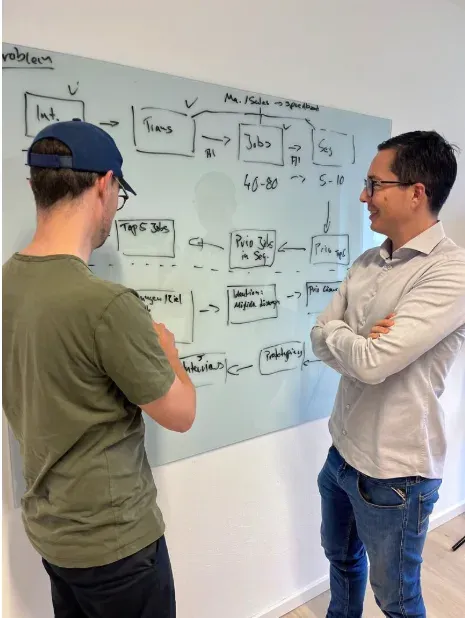
 Half the Driver Tree Is Done. Then Someone Asks: Is That Even a Driver?Three questions worth settling before you go to the whiteboard: where to start, how deep to go, and what a real driver is.
- Almost Every Simulation Model Started in ExcelThat is no accident and no problem. It gets critical when the file is meant to become the foundation of a process.
- Driver-Based Planning 2026 - Method, Software, and Practical ExamplesDriver-based planning connects operational drivers directly to the financial plan. How the method works, which software fits, and which mistakes to avoid.
 Many Planning Tools Talk About Versioning. They Do Not Mean the Same ThingSaving an earlier state is useful. For steering, what changed, why, and to what effect all have to become visible.
 Scenario, Sensitivity, Simulation: Three Terms That Keep Getting ConfusedA sensitivity varies one assumption, a scenario bundles consistent assumptions, and a simulation is the calculation between them.
- A 68 Percent Probability. And Then What?Monte Carlo simulation was part of our software and technically sound. Nobody wanted to use it. What was missing was a rule defined in advance.
 The Costliest Decisions Are Rarely the Wrong OnesAgainst wrong decisions there are committees, review loops and detailed analysis. Against slow decisions, remarkably little.
- Why Spend Months Building a Forecast Model if the Next Crisis Is Unpredictable?Sartorius ran the new model in parallel for months to build trust. In the end, AI forecasting combined with simulation clearly won on accuracy.
 The Bottleneck Is Not Modelling. It Is ValidationMost people are reluctant to hand over that final check. The reason is simple: accountability hangs on validation.
- Scenario Planning in Controlling - Why Traditional Forecasts Fall ShortHow scenario planning helps companies make better decisions under uncertainty.
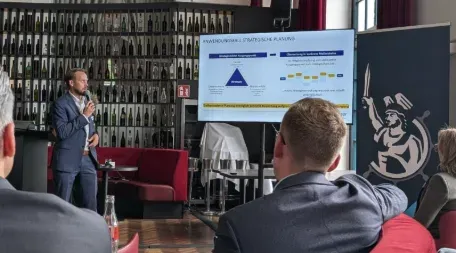 You Can Build Scenarios, but in the End You Have to CommitScenarios deliver ranges and decision logic. Governing bodies want a number. How Leipziger Verkehrsbetriebe translates between them.
- We Plan Against Our Fears. Few Are Prepared for ReliefAlmost every company had an oil price scenario ready at short notice. Many are missing the counter-scenario.
 The China Debate Is About Cost. The Problem Is Reaction TimeWhy a competitor from Shenzhen brings a product to market in the time it takes us to align the medium-term plan.
- Soon AI Will Propose the Scenario Itself. The Question Is Who Owns ItWhen a person computes a scenario, the assumptions are theirs. When an agent proposes one, you inherit its assumptions. Whether you know it or not.
 Are We Talking Too Much About the Talent We Lack?A Gartner survey names AI talent as CFOs' biggest near-term challenge. The obvious answer is recruiting. It may be the wrong one.
- AI in Controlling Makes Teams Faster. That Is the ProblemMaking wrong assumptions faster just means making them more often. The first AI output looks structured and plausible, and lands unchecked in the decision.
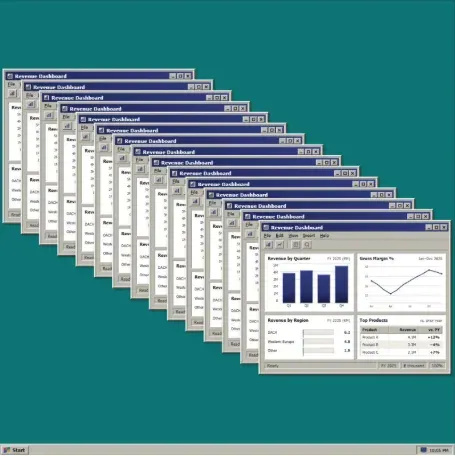 How Many Dashboards Show the Same Metric With Different Results?Every department builds its own view of the same data. More data does not fix it, because this is a governance problem.
- Business Partnering Sounds Good. In Many Companies It Is Less Than One PersonControlling teams of three or four do everything that a large group spreads across several positions. The expectation is the same regardless.
 A Scenario Is Not a PromptAI generates text, analysis and a first assessment quickly. In a finance context that is not enough.
 Tools That Get Their Own Conference Have PeakedThe Global Excel Summit is sold out, and generative AI is now built into Excel. Who will still be in demand in three years for typing VLOOKUP?
 Gen AI Does Not Feel Like a New Topic. It Feels Like a MirrorA result sounds plausible, but the assumption behind it is weak. Perhaps lifelong learning begins exactly there.
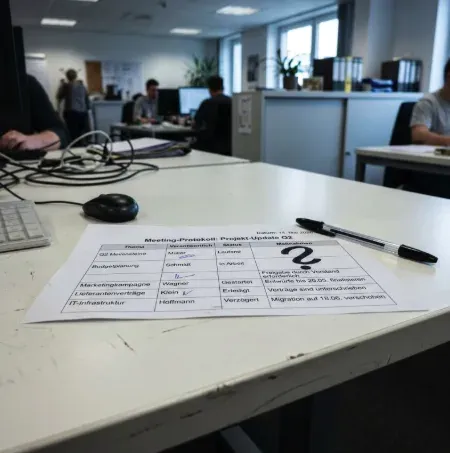 And Now What? The Question After Almost Every Scenario MeetingScenarios do not reduce uncertainty. What they can do is pre-structure decisions before the situation arrives.
- A Good Model Does Not Change an OrganisationThe drivers were right, the model worked, and the decisive effect still failed to materialise. What we underestimated in our early years.
 Business Partnering Shows in the Quality of the Questions, Not the Job TitleWhen the business asks how material costs affect margin: does controlling calculate, or does it ask back?
 AI Will Soon Do 80 Percent of Controlling Work. Who Does the Other 20?Data preparation and standard reports can be automated. But the 80 percent was never the actual job.
 Who Actually Steers ESG?Almost half of companies steer ESG without quantified targets. Yet controllers have handled non-financial measures for years.
 What Are We Talking About When We Talk About Simulation?Controlling thinks of a new budget version, risk management of Monte Carlo, the CFO of a number for the board. What it concretely means in steering.
- Late Friday Afternoon, the Forecast Is Done, Then New Tariffs ArriveSteering processes follow the calendar. The world outside does not. The more interesting question is what a late answer costs.
 A Sentence IBM Wrote in 1979A computer cannot be held accountable, so it must never make a management decision. That line is exactly where AI as a tool ends and AI as a decider begins.
- How Do You Actually Build a Good Driver Tree?In 2015 we searched for this and found a presentation from 2012. Three of its points have held up across ten years of project work.
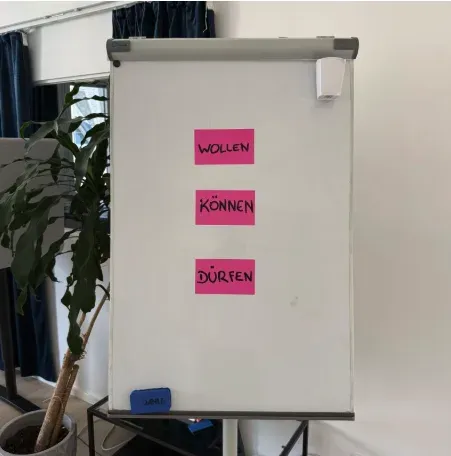 AI in Controlling Is Not an IT ProjectWilling, able, allowed: a former CFO broke change down into three words. With AI, what driver-based steering already showed is repeating itself.
 Hangers Without Hooks, and What They Say About Beyond BudgetingClassical planning bundles contradictory purposes into one set of numbers. Beyond Budgeting deliberately separates them.
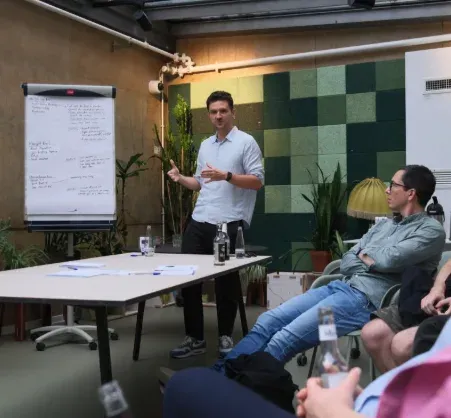 AI Accelerates Many Things. Above All the Illusion That the First Draft Is RightHow we treat the use of language models at Valsight not as a tool question but as a question of working practice and culture.
 Business Partnering Is Not a Helpdesk for Planning FormsHow a newly hired CFO got oriented faster by moving sliders on a driver model than through any deep dive into reporting packs.
 Your Best People Often Know More Than Your Steering Model ShowsTransparency does not come from ever more data. It comes from clarity about cause and effect.
 Financial Performance Is Not Created in Management ReportsBetween the strategic target picture and financial impact sits an act of translation. It does not happen through dashboards but through initiatives.
 Forward Accounting: When Planning Adopts the Logic of BookkeepingA clean, detailed planned income statement for coming years is not steering. Four symptoms, and what planning should deliver instead.
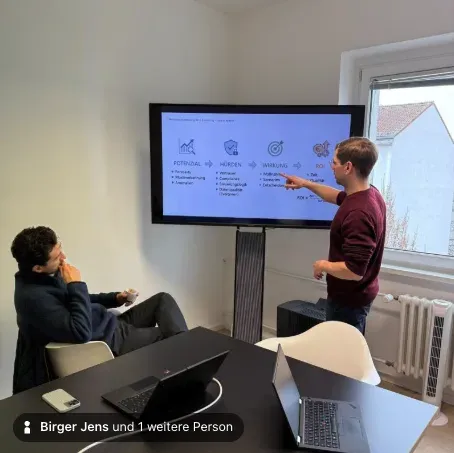 AI in Controlling Can Do a Lot. So Why Do We Use So Little of It?The choice of model is not what decides. What decides is what happens after a variance has been detected.
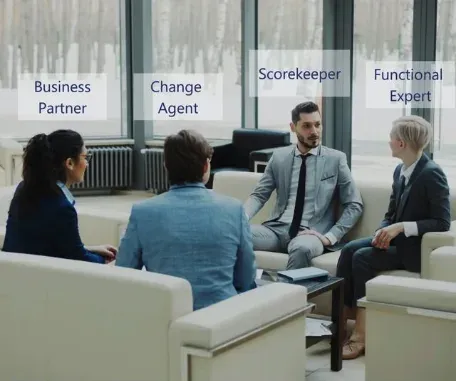 Controller Roles Are Not Footnotes for a Job TitleBusiness partner, change agent, decision scientist: not new titles but different stances towards supporting decisions.
 Why I Rarely Write About Product FeaturesSteering quality is not decided at feature level. The real lever sits in understanding steering logic and the business model.
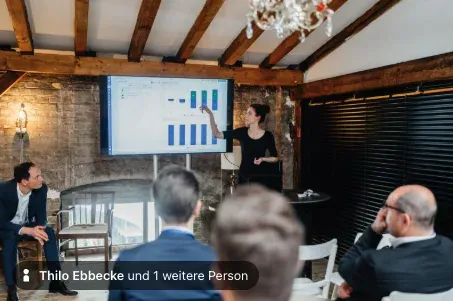 Good Decisions Do Not Happen on Slides. They Happen in ConversationThree principles that separate an effective steering meeting from a presentation slot.
- Volatility Often Gets Answered With Additional PrecisionAn honest structural stocktake: effort keeps rising while the felt steering impact keeps falling.
- Three Signals From the CEO World, All Pointing the Same WayOnly around 30 percent of CEOs are confident about revenue growth. This is no environment for a single plan line.
 A Pilot Project Is Not a Leap Into the UnknownThe security discussion and the pilot question often get conflated. A good pilot is a controlled proof of value with clear guard rails.
 What Happens If: Where the Misunderstanding About Simulation StartsA forecast delivers a number, a simulation delivers options. The difference is not semantic but material to steering.
- The Biggest Mistake in Projects: Assuming Acceptance Arrives With the ConceptDriver-based is not just a model but a new way of arguing. Why a contained pilot dissolves resistance instead of talking it away.
 Stability Is No Longer a Planning Assumption. It Is Wishful ThinkingExternal shocks are no longer cyclical but structural. What follows when volatility becomes a design assumption of steering.
2025
 In Uncertain Times, the Best Scenario Is Not What DecidesScenarios do not help you predict the future. The difference is not made in the calculation but in what you do with it.
 Many Companies Plan a Great Deal. Yet Too Little Gets SteeredPlanning delivers structure and transparency. It does not answer the decisive question: what takes priority now, and what deliberately does not?
- Corporate Steering Rarely Fails on GoalsGoals matter, but without clearly defined measures they stay abstract. Why the discussion should shift from debating targets to debating execution.
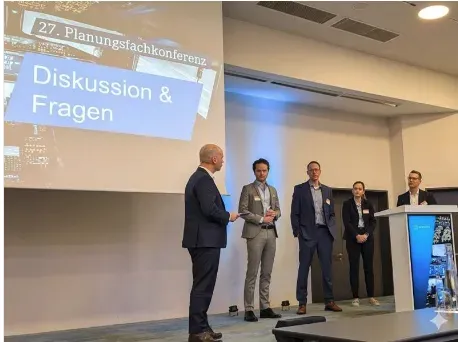 The Bottleneck in Corporate Steering Is Not the TechnologySartorius presented a strikingly modern forecasting approach at the planning conference. The central lesson was not the one expected.
 The Slowest Process in the Company Is One Simple QuestionNot the IT change request, not the month-end close. It is answering a what-if from the board.
 Trust Only the Numbers, and the Numbers Will Surprise YouThe best early warning system is neither a metric nor a process. It is a team that talks openly about uncertain assumptions.
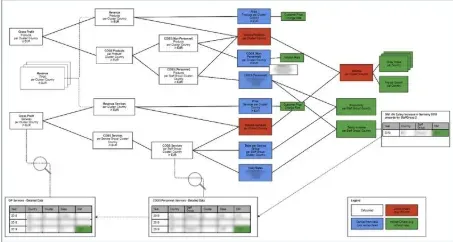 Many Value Driver Models Fail at the Design StageSimply reproducing existing structures gives you an impressive model that does not hold up day to day. The right starting point is the steering question.
 Most Decisions Do Not Fail for Lack of DataAnyone who does not understand the cause-and-effect relationships in their business can only own results, not the measures behind them.
 AI Is Changing Controlling, but Not the Way Many ExpectThe problem is not tools or data quality but how we handle uncertainty. Insights from a discussion with two finance leaders.
- Most Plans Do Not Fail on Software. They Fail on PoliticsAs long as incentive systems reward short-term target achievement, numbers get negotiated instead of assumptions being questioned.
- More KPIs Do Not Improve Steering. They Just Obscure ItROI, NPS, OKR, north star metric, often all at once. The 7x7 concept for systematically selecting top-level metrics.
 When the Numbers Are Bad, Less Control Is NeededMissed targets, cost programmes, job cuts. Why the reflex towards more control hurts at exactly the moment shaping is required.
- Calculating Is Not SteeringA rule of three explains what happened. Not why it happened, and certainly not what might happen next.
 Integrated Steering Is Not About Connecting More DataStrategy sets goals, planning allocates budgets, risk writes reports. Three principles that turn separate disciplines into one system.
 Forecasts Do Not Need to Be Exact. They Need to Be Decision-RelevantChasing ever more precision costs exactly what a forecast is supposed to deliver: orientation and speed.
- Good Planning Is Measured by Impact, Not AccuracyThree takeaways from a webinar with Controller Akademie: speed beats precision, scenarios in seconds, and making driver logic visible.
- Good Decisions Come From Clarity About the AlternativesExperience and intuition no longer suffice under uncertainty. How BLANCO simulates scenarios live in the management meeting.
 Planning Season Is the Best Time to Rethink PlanningIn the middle of the process there is no time for improvements. Yet that is exactly where the friction is most visible.
 One Tiny Change, and Suddenly Everything Feels WrongTwo swapped keys on a new laptop explain more about change management in controlling than any presentation.
 Forty Years of Excel, Still in the ToolboxExcel shipped on 30 September 1985. Three fun facts, and the question of how much the tool still has to solve on its own in controlling.
 Budgets Provide Orientation. In Reality, RarelyStable goals, rolling forecasts, scenarios that surface options. How orientation emerges without rigid plans.
 From Guardian of the Numbers to Architect of Corporate SteeringScorekeeper and guardian roles are losing weight while business partner and decision scientist gain. The forces driving that shift.
 Numbers Speak for Themselves. Unfortunately Only Controllers Think SoFinancials on one side, unit counts and changeover times on the other. Three ways to build the bridge between finance and the business.
 Budgets Age Faster Than We Can Build ThemThree to six months to build, obsolete within weeks. How a base scenario and variants on top of it break the cycle.
 When Trade Agreements Have a Half-Life of DaysThe decades-old link between global growth and German exports no longer holds. Steering processes are still built for stability.
 Four Feedback Loops Then, One Live Simulation NowPresent, gather feedback, revise, present again. What changes when scenarios get computed live in the meeting itself.
 Strategy, Operational Planning and Risk Management as Separate WorldsWhy disconnected partial plans produce conflicting goals and risk blindness, and which single lever changes the strategic discussion immediately.
 What a Flat-Pack Shelf Has to Do With Rolling Out Controlling SoftwareThe IKEA effect explains why teams value what they built themselves. The biggest lever in change management is rarely the requirements document.
 Eight Billion Euros, Deep Uncertainty, and a Board That Wants AnswersHow one industrial group cut its response time on ad-hoc board questions from over a week to under 30 minutes.
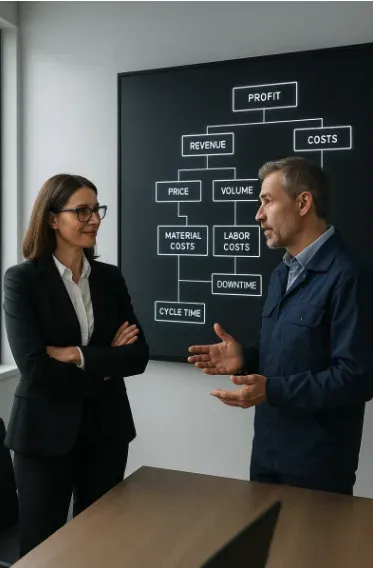 When the Plant Manager and the CFO Discuss the Same ChartControlling and operations talk about the same metrics and mean different things. A visual driver model gives both sides one shared language.
 Why Pilot Projects Matter More and More in ControllingA pilot is not a tool test. It de-risks a far-reaching decision and makes change tangible for everyone involved. Three aspects decide the outcome.
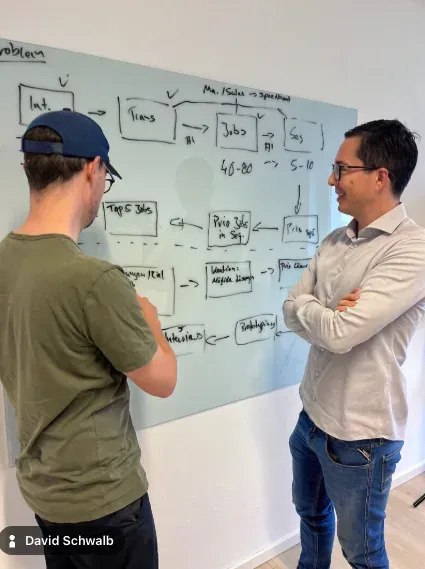 Are Planning, Forecasts and Reports Actually Products?Product-market fit is not only a topic for product teams. What changes when controlling treats its own deliverables as products.
 In 15 Minutes, Not 15 DaysOne finance team cut the time to compute a new scenario from eight days to under 15 minutes. Three principles made the difference.
 Why IT Projects Run Off the RailsToo much optimism, missing benchmarks, scope creep: the three most common reasons IT projects fail, and what that means for controlling projects.
 We Need a Lot of Things, but Definitely Not Another Planning ToolWe heard this constantly when Valsight started. The objection was fair, and it is exactly why we built something other than another planning tool.
 New Requirements, Old Software: Does It Always Take a New Tool?When planning and forecasting processes change, the answer is rarely a new system by necessity. Why evolving what you already run is often the smarter move.